
By Heather Burke and Lynley A. Wallis
At the time they were declared in 1848, the Burnett and Wide Bay pastoral districts marked the northernmost extent of New South Wales (NSW). Wide Bay encompassed the portion west to the range, and south to the headwaters of the Brisbane River. The northernmost portion stretched as far as the area where Rockhampton would later be established, with the northern half becoming part of the new Port Curtis district when the latter was declared in 1854.
The Burnett was bounded by the Brisbane and Burnett Rivers to the south, west by the Great Dividing Range, north by the Dawson River and east by the range separating the westward falling watersheds of the Burnett from those running east into Wide Bay. The boundaries were amended on the western flank in 1851, and in 1854 the Burnett was abolished, with the Dawson becoming part of Leichhardt and the northern section becoming part of Port Curtis; the remainder to the east was transferred to Wide Bay. From 1854 the new pastoral district was known as Wide Bay and Burnett. Under the Pastoral Leases Act of 1863 the Wide Bay and Burnett was separated once more into the Wide Bay (settled) District and Burnett (unsettled) Districts, but the two were again amalgamated in 1868, reverting to the Wide Bay and Burnett Pastoral District.
White Exploration
Andrew Petrie is usually credited with being the first White man to explore as far north as Wide Bay in 1842, with a party that also included pastoralist Henry Stuart Russell, although several escaped convicts from the Moreton Bay Penal Settlement had absconded to the north in previous years. David Bracewell and James Davis, for example, lived for many years with Aboriginal people, both returning to Moreton Bay with Petrie in 1842. Davis had lived with groups in Wide Bay. The Aboriginal people Petrie’s party encountered were often very afraid of them, although a group they met along the Mary River were inclined to be hostile because of an act only two months earlier at Kingaroy, in the Moreton District, when an unknown number of Aboriginal people had been poisoned on Evan Mackenzie’s Kilcoy station (Brisbane Courier, 28 April 1888, p.7; Russell 1841).
Almost immediately after returning to Moreton Bay, Russell set out again for Wide Bay and Burnett in search of a suitable run. William Glover, Henry Stuart Russell’s business partner, was part of the party, taking up one of the first runs on their behalf, Burrandowan, in south Burnett. Glover described the Aboriginal people they encountered in the Burnett as “fine-formed”, but also “treacherous, cruel, and great thieves”, an opinion formed by him as a result of earlier events at Jondaryan on the Darling Downs but transferred to other Aboriginal people automatically (Stuart Russell 1888:347). Leichhardt subsequently came through the Wide Bay district in 1843, visiting John Eales’s station at Tiaro, and exploring what was then known as the “Wide Bay River” (later the Mary). Although he saw Aboriginal people, and they him, the majority of his observations concentrated on the flora and fauna, as well as the geology of the region.
NMP Presence
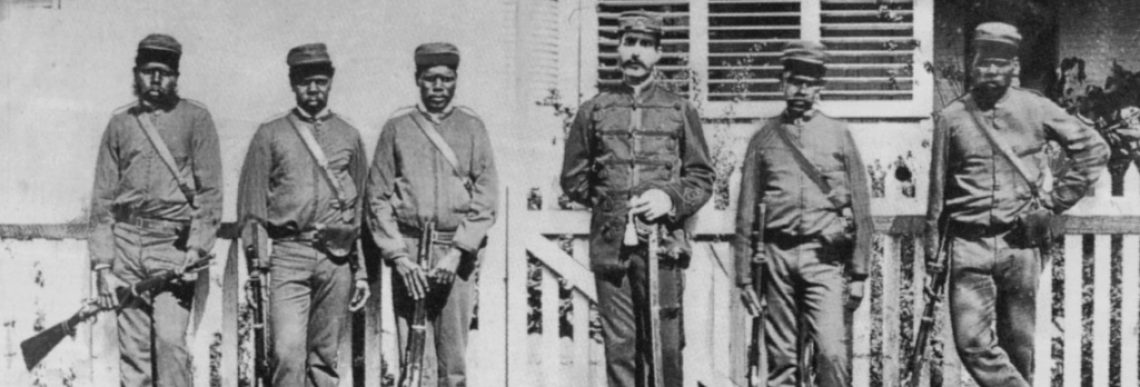
There were fewer NMP camps in Wide Bay and Burnett compared to most other pastoral districts. The earliest was Walla, an outstation of the Callandoon headquarters, which was established in 1850 to service the Lower Burnett River (QSL 1851 Letter from Frederick Walker to Colonial Secretary 10 March, NSW Colonial Secretary Letters Relating to Moreton Bay and Queensland 1822–1860, Reel A2.37). Given that there were no funds provided for the construction of camps at the time, it is likely that Walla was erected by pastoralists concerned to have the NMP in their region, as was the case with its sister camp at Wandai Gumbal, established the following year (Maitland Mercury and Hunter River General Advertiser, 9 July 1851, p.4). Although the precise location of the Walla camp is unknown, it was located on J. Archibald McMurdo Thompson’s and John and Bryce Barker’s station, Walla, near Gin Gin, and was in operation for around six years, until at least 1856.
The NMP camp at Traylan was constructed in 1852 at a cost of £150, and closed in 1856. In the latter half of 1853, Frederick Walker, the Commandant until 1854, appears to have spent considerable time at Traylan, making it his de facto headquarters after he removed from Callandoon. Also in 1853 a new camp at Yabber was established “in the Bunya Country” to “overlook both the Moreton & Wide Bay Districts” (QSA86133 Distribution of Men and Horses of the Native Police on the [blank] day of [blank] 1855). It seems to have been short-lived and was no longer in existence after 1856, the year in which the entirety of the NMP were moved north to follow pastoral expansion.
In that year, the then Commandant, Edric Morisset, was given orders to move “the Head Quarters or main camp of the 2nd Division of Native Police from Traylan to a more eligible locality” at Tiaro on the Mary River (QSA17616 1857 Letter from Edric Morisset to John Wickham 12 February, Letters addressed to the Government Resident by the Colonial Secretary, Sydney, on the Native Police). This became the headquarters until 1857. Tiaro turned out to be an unsuitable location for a permanent camp, however, causing Morisset to request permission in late 1856 to remove to the Government Reserve lower down the Mary River. In early 1858 the Government ordered the removal of NMP headquarters from Maryborough to Brisbane altogether, although Morisset and a detachment remained at Cooper’s Plains until April of that year (QSA282454 1858 Letter from F.B. Hampton to Government Resident 21 April, Letterbook NP 1857–185; QSA212550 1857 Native Police Records Quarterly Account Book 1 Jan 1857–31 Dec 1858 A/4768). The Cooper’s Plains camp was later reoccupied by the NMP from 1859 until 1864 as the headquarters of the Second and subsequently Sixth Divisions.

Nothing is known about the Musket Flat NMP camp, apart from its existence once it was no longer in use. Dating to sometime before 1864, there is only one reference to it, in a letter from the Commissioner of Police who referred to the “old Native Police Barracks at Musket Flat, about twenty miles on the Gayndah Road” (QSA846786 1864 Letter from Commissioner of Police to Colonial Secretary 19 April, Colonial Secretarys Office In Letter 64/1824). It was probably a temporary camp used in the early 1850s by detachments when patrolling the Gayndah region from the various dedicated camps at Traylan, Walla and Callandoon.
Conflict Events
There were at least 228 conflict events in Wide Bay and 62 in the Burnett. At least 180 people were killed and 58 wounded across both pastoral districts, most of them in Wide Bay, and most on pastoral runs (n = 83 or 36%).
Wide Bay, because it combined agricultural with pastoral activity, also had events associated with selections (n = 34) and the main township of Maryborough (n = 23), where ‘outrages’, however minor, were regularly documented in the local newspapers and reported by the Commissioner of Crown Lands, Arthur Halloran.
Events span the 1830s until the 1890s. The earliest events occurred following the wreck of the Stirling Castle, bound for Singapore but wrecked off Rockhampton, its survivors eventually coming ashore on what would later be named Fraser Island for the Captain, James Fraser, and his wife, Eliza. James was speared and another crew member killed, but Eliza survived and was taken in by Aboriginal people, although she interpreted her experience as one of torture and deprivation (for a full exploration of cultural differences in the interpretation of various actions see Behrendt [2000]). A party of convicts and members of the 4th Regiment from Moreton Bay in search of the survivors was attacked near Double Island Point. The latest events were killings of Aboriginal men in 1889 near Eidsvold and in 1890 near Gympie. Most events in the Burnett took place in the 1850s, and in Wide Bay in the 1850s and 1860s.
Across this time period, the known death toll for Aboriginal people was more than twice that of Europeans (136 vs 51), despite the majority of documented events centring on attacks on stock and property (43%), followed by attacks on non-Indigenous people (37%).

Political Representation
The original electorate of Wide Bay was split into Wide Bay and Maryborough in 1864. It had two members between 1878 and 1888. The Burnett electoral district was a two-member electorate between 1860 and 1873, before transitioning to a single member seat from 1874.
Members for Wide Bay included Gilbert Eliott (1860–1870), Henry King (1870–1871; 1871–1873), Horace Tozer (1871–1871 [two months]; 1888–1898) and William Bailey (1873–1888). For Maryborough, it was William Henry Walsh (1865–1873), Berkeley Moreton (1873–1875), John Douglas (1875–1880), Henry King (1878–1883), Henry Palmer (1880–1883), Richard Sheridan (1883–1888), John Hurley (1883–1884), John Annear (1884–1902) and Richard Hyne (1888–1893).
Members for Burnett included Charles Haly (1860–1863; 1865–1867; and 1869–1871), Robert Mackenzie (1860–1869), John Edwards (1863–1865), Ratcliffe Pring (1867–1870), Berkeley Basil Moreton (1870–1871), John Bramston (1871–1873) and Walter Scott (1871–1873).
Of these, Eliott, Walsh, Moreton, Haly and Edwards were pastoralists, the others public servants, storekeepers or lawyers. Elliot had taken up Yendah, Walsh Degilbo, Moreton and his brother took over Wetheron from Humphries and Herbert, Haly and his brother William had taken up Taabinga c.1846 (Courier Mail 19 April 1950, 2), and John and Henry Edwards Ban Ban from Robert and Henry Herbert after 1860 (Moreton Bay Courier 23 February 1860: 3).
Not all were in favour of the NMP—Gilbert Eliott wanted to see the Force abolished in the settled districts and sought a warrant for the arrest of officer Joseph Harris for the murder of an Aboriginal man in 1863, and William Henry Walsh was one of the Burnett squatters who agitated to have Frederick Walker dismissed as Commandant in 1852. For Walsh and the others who joined him—among them William Forster of Gin Gin, William Humphreys and Henry, George and Thomas Herbert of Wetheron, Jonathan Landsborough of Monduran, and Robert Wilkie and Henry Cox Corfield of Teebar—their campaign was not based on any desire to protect Aboriginal people but from the fact that the NMP, in their eyes, had failed to patrol their runs sufficiently, or to perform satisfactorily when they did. Unsurprisingly, after having succeeded at removing Walker, it was also the Burnett squatters who became the main contingent behind the 1858 NSW Legislative Assembly enquiry into the NMP following the deaths of the Frazer family at Hornet Bank at the end of 1857, focussing on the need to expand trooper and officer numbers. Its diminution following Walker’s dismissal had placed their squatting interests in jeopardy, and their subsequent activity resulted in the reinstatement of a Commandant and the expansion of the force.
Key Pastoralists and Stations
Petrie, on his exploration in 1842, was accompanied by several men in search of new sheep runs, including Henry Stuart Russell from Cecil Plains on the Darling Downs and Mynarton Joliffe, who was superintendent to John Eales from the Hunter Valley. Eales subsequently became the first pastoralist in Wide Bay with the establishment of Noomoowoolloo at Tiaro (which included the Owanyilla outstation) in 1843. Unable to find suitable land in Wide Bay, Stuart Russell returned to explore further north into the Burnett, taking up Burrandowan with William Glover in the same year (Slocomb 2023:np). The station is annotated on Christopher Rolleston’s 1849 map as “First station occupied by H.S. Russell in the year 1843”. Other 1843 runs include Nanango and Tarong, taken up by William Elliott Oliver and James Borthwick respectively, Gigoomgan (John Eales, transferred 1849 to Henry Cox Corfield and Richardson), Barambah, by Ferriter and Uhr (taken over by Richard Jones by 1849) and Eidsvold and Coonambula, claimed by the Archer brothers. E.B. ‘Ned’ Hawkins took up Boonara c.1846 (Maryborough Chronicle, Wide Bay and Burnett Advertiser 14 April 1930, 6), John Daniel Mactaggart Kilkivan c.1847, Hawkwood by John Kinchela (late 1848), and Percival Stephens Brovinia by 1846 (Bundaberg Mail 7 January 1922, 6). Yarrol and Cania, in the far north of the Burnett district, were occupied by R.B. and J.C. Ridler c.1848 (Bundaberg Mail 7 January 1922, 6). Dykehead (on the Auburn River) was taken up by Robert Fleming c. 1846.
By 1849 Christopher Rolleston’s map of Burnett and Wide Bay (SLNSW FL3800931) showed runs on all the major water courses. Runs taken up by this date included Mondure, near Gayndah, by Richard Jones, Kolan by Atticus, Nelson and William Butler Tooth, Rawbell by Adolphus Henry Trevethan 1848 (Bundaberg Mail 14 June 1919, 7), Stanton Harcourt by W.H. Walsh (transferred c1854 to H.C. Corfield), Teebar by H.C. Corfield (transferred to John Eaton c.1854), Nanango by William Elliot Oliver, Ideraway by James Reid, and Redbank in 1848 by John Ross (later R. Hamilton – Bundaberg Mail 14 June 1919, p.7). Other runs included Auburn (possibly earlier that 1849, Central Queensland Herald 13 November 1947, p25), Dalgangal (James, Patrick and Hugh McKay), Taabinga (William and Charles Haly, 1846 – Daily Mail 20 April 1925, 13), Cooranga (Robert Strathdee), Wetheron (c.1847, John and Willliam Humphries and Herbert, sold 1858 to Berkeley and Seymour Moreton and Osmond De Prior Brock – Maryborough Chronicle, Wide Bay and Burnett Advertiser 14 April l1930, 5; 15 May 1930, 5), Degilbo (c.1848, Perrier brothers, bought early 1850s by William Henry Walsh, later Kent and Weinholt), Yendah on the Burnett River (Gilbert Eliott and Wilkin 1848, later Reid?, followed by Dight and Yeomans – Bundaberg Mail 7 January 1922, 6), Marodian (the Scott brothers), Wigton (George Mocatta, sold 1851 – Bergman 1974), Boubijan and Boondooma (c.1847 Clement and Paul Lawless), Ban Ban (Robert and Henry Herbert, c.1846, sold 1860 to John Edwards), Mundubbera (H.P. Bouverie), Cannindah (Colin Campbell McKay 1849) and Mt Debateable (George Mocatta 1848) (Bundaberg Mail 7 January 1922, 6). Kenilworth was taken up the following year (1850) by Joseph Smith.
Gin Gin had been taken up Foster and Blaxland by 1847 (Bundaberg Mail 7 January 1922, 6) and became the site of a catalysing frontier conflict event, when Gregory Blaxland was killed on the run in 1850. Much of the agitation from the Burnett squatters against Frederick Walker was motivated by Blaxland’s death, despite the fact this took place before the NMP had arrived in the district (QSL 1852 Letter from Frederick Walker to Colonial Secretary 20 October, NSW Colonial Secretary Letters Relating to Moreton Bay and Queensland 1822–1860, Reel A2.24). Manumbar had been occupied by John and Alec Mortimer in partnership with A. Anderson since 1848, and also became the site of controversial events when at least four Aboriginal people were shot on the run in 1861 by the NMP, causing the Mortimer brothers to complain in the media. As a result, John Murray, then in charge at Cooper’s Plains in the Wide Bay district, was dismissed from the force.
Several runs in Wide Bay, including Walla (J. Archibald McMurdo Thompson), Yabba/Yabber (John Daniel Mactaggart c1849, later John and Alec Swanson by 1856, later Clement and Paul Lawless by 1857 and consolidated as part of Imbil in 1868 – King 2001) and Widgee (William Butler Tooth, 1846), supported NMP camps. The camp at Widgee, unlike Walla and Yabba, was built privately by Tooth deliberately to encourage the NMP to visit his run when on patrol. The Bingera run(s) was taken up by Richard Purvis Marshall after his departure from the NMP in 1855.
References
Behrendt, L. 2000 The Eliza Fraser captivity narrative: A tale of the frontier, femininity, and the legitimization of colonial law. Saskatchewan Law Review 63(1):145–84.
Bergman, G.F.J. 1974 George Gershon Mocatta (1815–1893).
Bloxsome, H.S. 1945 The discovery, exploration and early settlement of the Upper Burnett. Journal of the Royal Historical Society of Queensland 3(5):331–350.
Darragh, T.A. and R.J. Fensham (eds) 2013 The Leichhardt diaries. Early travels in Australia during 1842–1843. Memoirs of the Queensland Museum 7(1): 1–362.
King, J. 2001 Imbil. Jewel of the Mary Valley. Imbil: Joy King.
McKinnon, F. 1940 Early pioneers of the Wide Bay and Burnett. The Historical Society of Queensland Journal 3(2):90–99.
NSW Legislative Assembly 1857 Native Police Force. Report from the Select Committee on the Native Police Force; Together with the Proceedings of the Committee and Minutes of Evidence. Sydney: William Hanson.
Russell, H.S. 1845 Exploring excursions in Australia. Journal of the Royal Geographical Society of London 15:305–327.
Slocomb, M. 2023 Double Vision: A History of Race Relations in the Wide Bay and Burnett. Bloomington: Balboa Press.